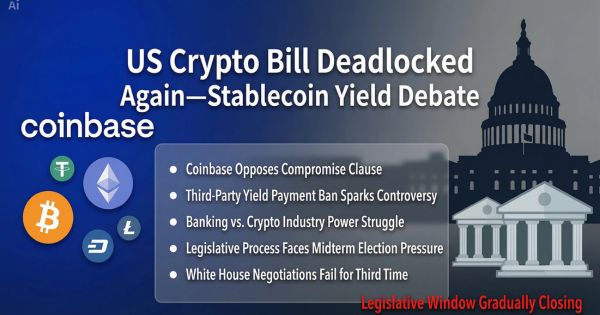
The legislative progress of the U.S. Senate crypto market structure bill has once again stalled over the issue of stablecoin yield. According to Punchbowl News, Coinbase representatives told senators in a meeting on Monday that they oppose the stablecoin-yield provisions in the latest compromise draft. This move could repeat history—after Coinbase withdrew support in January, the Senate Banking Committee indefinitely postponed consideration of the bill.
Core Controversy: Ban on Third-Party Yield Payments
Earlier this week, a rumored compromise proposal would prohibit exchanges and other third-party entities from paying stablecoin yield. The goal is to address banks’ concerns about deposit outflow risk.
Banking groups argue that stablecoin yield offered by exchanges is effectively a workaround for the “no direct payment of yield by issuers” framework under the Genius Act. They warn this could increase the risk of money flowing out of the traditional banking system and into stablecoins.
For crypto exchanges, stablecoin yield is a key revenue source. Crypto lobbying groups, meanwhile, say banks are overstating risks and accuse the banking industry of anti-competitive behavior.
Coinbase’s Key Role in the “Clear Act” Stalemate
Coinbase is among the largest crypto lobbyists in the U.S. In January, after it withdrew support, the Senate Banking Committee quickly deferred the bill indefinitely—showing Coinbase’s influence over the legislative process. This time, Coinbase’s renewed opposition may once again obstruct the latest push led by Republican Senator Thom Tillis and Democratic Senator Angela Alsobrooks.
Alsobrooks previously said the compromise bill could leave both sides dissatisfied, highlighting the inherent dilemma of this debate.
Time Pressure: Midterm Elections Approaching
Republicans are pushing to pass the bill before the November midterm elections, after which the composition of Congress could change—reducing momentum. The House already passed its version of the Clear Act in July last year, while the Senate has lagged significantly.
Senator Cynthia Lummis wrote on X:
“We can’t wait until 2030 for the next opportunity. Bipartisan compromise is a necessary condition for passage of the Clear Act. We’re working around the clock to ensure stablecoin rewards are protected and to prevent community banks’ deposits from flowing out.”
White House Talks: Three Meetings, No Breakthrough Yet
This year, the White House has held at least three meetings—trying to bring crypto and banks to an agreement—but so far there has been no result. Patrick Witt, Executive Director of the President’s Council on Digital Assets, said on X that social media is full of “a lot of misinformed FUD,” but he remains optimistic:
“Everything will get resolved. Bullish.”
Conclusion: Stablecoin Yield Became the Legislative Roadblock
From the Genius Act to the Clear Act, stablecoin yield has become the most difficult core dispute in U.S. crypto legislation. Coinbase’s latest opposition suggests that the window to pass a Senate bill before the midterms is narrowing.
In the tug-of-war between banks and the crypto industry, any compromise could anger one side while pleasing the other. The breakthrough may require more political momentum—not just technical wording. And in the end, the outcome of the midterm elections could matter more than any specific legislative clause.